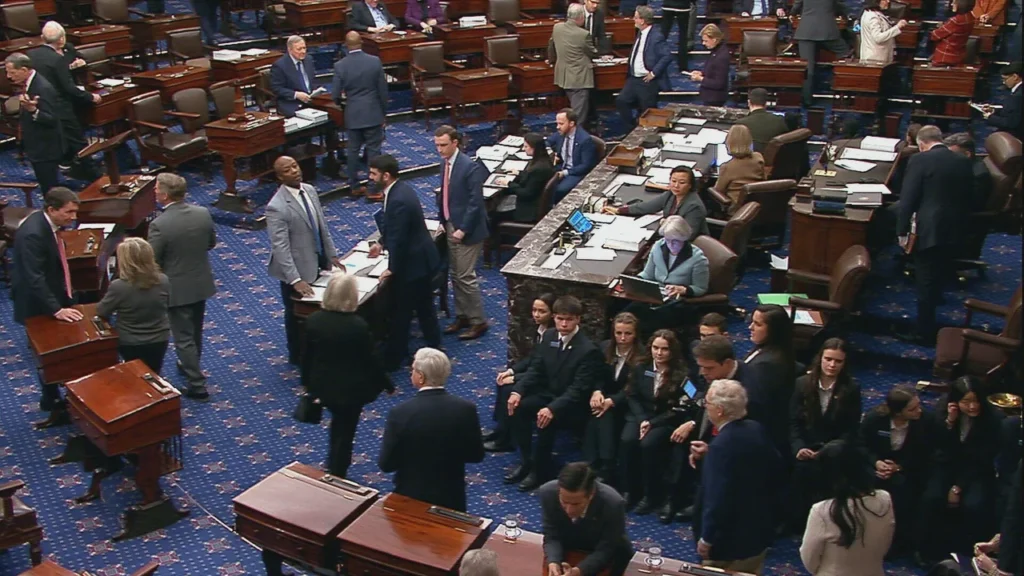
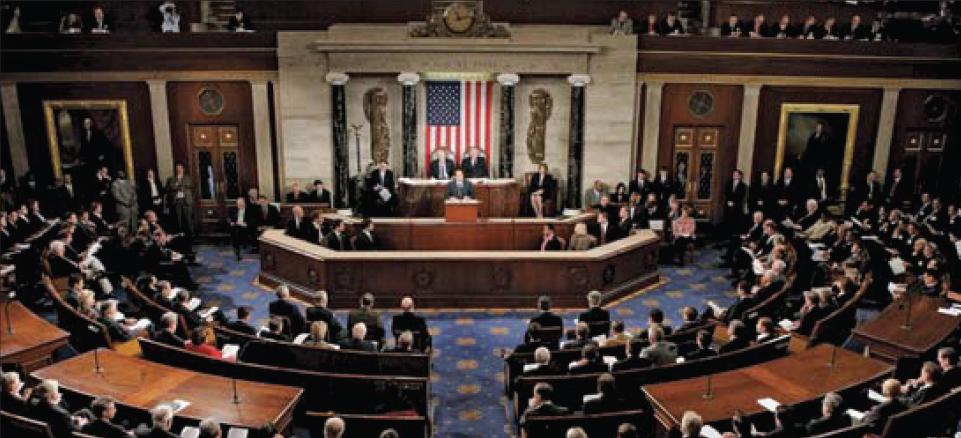
On January 31 2026, the United States federal government entered a partial shutdown after Congress failed to finalize full funding for all departments before the midnight deadline. Despite bipartisan negotiations in the Senate approving a broad funding package, the House of Representatives postponed its vote leading to halted funding for key agencies such as the Department of Homeland Security and parts of the Pentagon.
This shutdown is strongly tied to political divisions over immigration enforcement reforms after recent controversial incidents involving federal agents, which have intensified debates in Washington. Many lawmakers are refusing to approve long-term spending until changes to immigration policy and agency practices are agreed upon.
Hundreds of Protests Across the Nation Over Immigration Policies
Across all 50 U.S. states and Washington, D.C., more than 300 anti-immigration enforcement protests were organized this weekend under the banner “ICE Out of Everywhere.” These demonstrations are a direct response to fatal incidents involving Immigration and Customs Enforcement (ICE), including the recent killing of a U.S. citizen by federal agents.
Protesters are calling for comprehensive reform of U.S. immigration law enforcement, accountability for agents accused of excessive force, and an end to warrantless home entries. Demonstrations included marches, vigils, airport protests, and community gatherings, with organizers urging lawmakers to defund portions of the Department of Homeland Security until meaningful changes are made.
Civil Rights Investigation Into Death of Alex Pretti
Amid the unrest, the U.S. Department of Justice has launched a major federal civil rights investigation into the death of Alex Pretti — a U.S. citizen who was shot and killed by U.S. Customs and Border Protection agents during an immigration operation in Minneapolis.
The FBI is now leading the probe, which has further fueled public debate over enforcement tactics and the power of immigration agencies. Civil rights groups, Democratic leaders, and community activists have demanded transparency and tighter oversight of federal agents.
U.S. Financial Markets See Mixed Signals in January
Wall Street ended January with a mix of resilience and volatility. The Dow Jones Industrial Average declined slightly on January 31 but still recorded a monthly gain — marking one of the longest winning streaks in recent years. The S&P 500 and Nasdaq also showed modest increases, reflecting strong corporate earnings and investor optimism in parts of the market.
However, economic uncertainty remains as investors react to geopolitical tensions, the partial government shutdown, and leadership shifts at the Federal Reserve. President Trump’s recent nomination of a new Federal Reserve Chair has sparked debate over the central bank’s future policy direction.
American Airlines Reestablishes Service With Venezuela
American Airlines has announced plans to resume commercial flights between the United States and Venezuela for the first time since 2019, marking a major shift in travel and diplomatic ties between the two countries.

Why This Matters
For nearly seven years, direct flights between the U.S. and Venezuela were suspended after airlines halted service due to safety concerns and deteriorating political conditions in Venezuela. American Airlines was the last U.S. carrier operating in the country before the suspension.
Now, following recent political and airspace changes, the airline has signaled its intent to reintroduce nonstop service between major U.S. hubs (like Miami) and Venezuelan cities such as Caracas and Maracaibo.
U.S.–Iran Tensions Rise as Naval Drills Announced
The United States and Iran are once again at the center of rising geopolitical tensions in the Middle East after Tehran announced two-day live-fire naval drills in the strategic Strait of Hormuz, one of the world’s most important maritime trade routes. These developments are happening against the backdrop of an increased U.S. naval presence in the region and warnings from Washington about the potential for unintended military confrontation.
What Iran Has Announced
On January 31, 2026, Iran’s military revealed plans to conduct live-fire naval exercises beginning on February 1 in the Strait of Hormuz, a narrow waterway through which about 20% of the world’s petroleum passes. The drills, expected to involve the Islamic Revolutionary Guard Corps (IRGC), include firing live ammunition and various maritime maneuvers close to this crucial shipping corridor.
Iran has issued navigational warnings in advance of the drills, alerting international commercial vessels that parts of the strait may be affected by military activity. Some reports indicate that the exercises could occur near busy marine traffic lanes, raising concerns about safety and disruption to global energy supplies.
U.S. Military Response and Warnings
In response to Tehran’s announcement, the U.S. Central Command (CENTCOM) has publicly warned Iran’s military to conduct the exercises safely and professionally, emphasizing that any “unsafe or unprofessional behavior” near U.S. forces or civilian shipping risks escalation. CENTCOM specifically stated that it will not tolerate actions such as high-speed boat approaches toward U.S. vessels, unclear armed overflights, or any maneuvers that might threaten freedom of navigation in the strait.
The U.S. military has also increased its naval presence in the region in recent days, including deploying additional vessels such as guided-missile destroyers and the USS Abraham Lincoln aircraft carrier strike group. These assets position U.S. forces closer to the Gulf, signaling readiness to protect American interests and to deter possible threats.